Working seasons rather than permanent catastrophe
People in the Roven Reach distinguish hard cold, breakwater, growing light and returning dark as practical seasonal descriptions. These are proposed regional terms, not new calendar months or a planetary climate model. Conditions overlap. Stavenbruck's Rift-anchored cold can persist while Tarnfeld begins field work; an industrial street may contain slush beneath a warm discharge even when an exposed road is frozen solid.
Hard cold makes heat, protected water and dependable maintenance more valuable. Breakwater brings thawing surfaces, changing river access and arguments over drainage. Growing light permits the productive valley's main cultivation period without making it warm or uniformly fertile; gardening takes place inside full transparent enclosures. Returning dark concentrates repair, storage and the decision of which buildings will be fully occupied through the colder period. A mild week is not evidence that the Rift has retreated. A severe storm is not proof of a new advancing geological front.
Landscapes people have altered
Tarnfeld's productive strips depend on drainage channels, windbreaks, maintained pumps and labour.
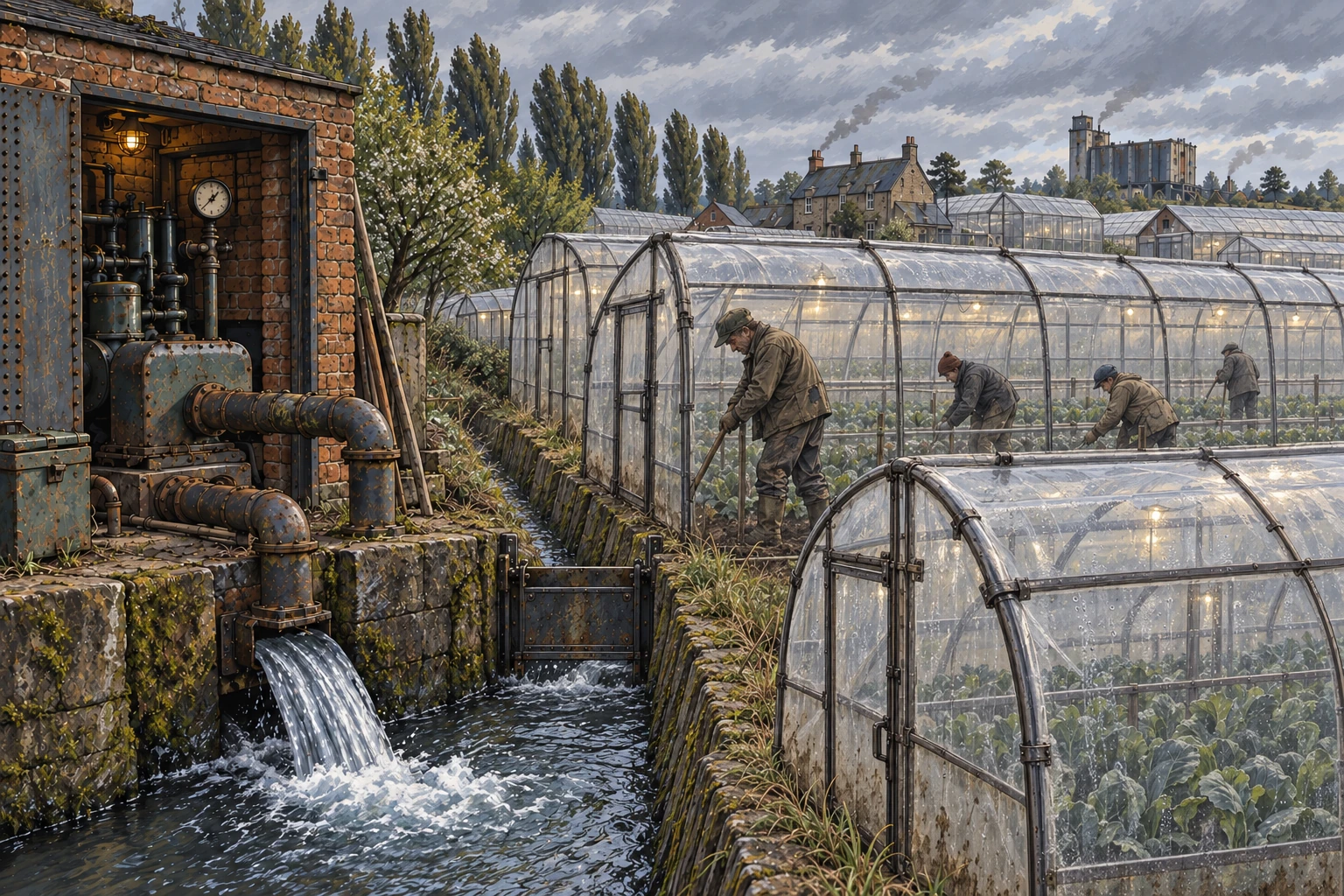
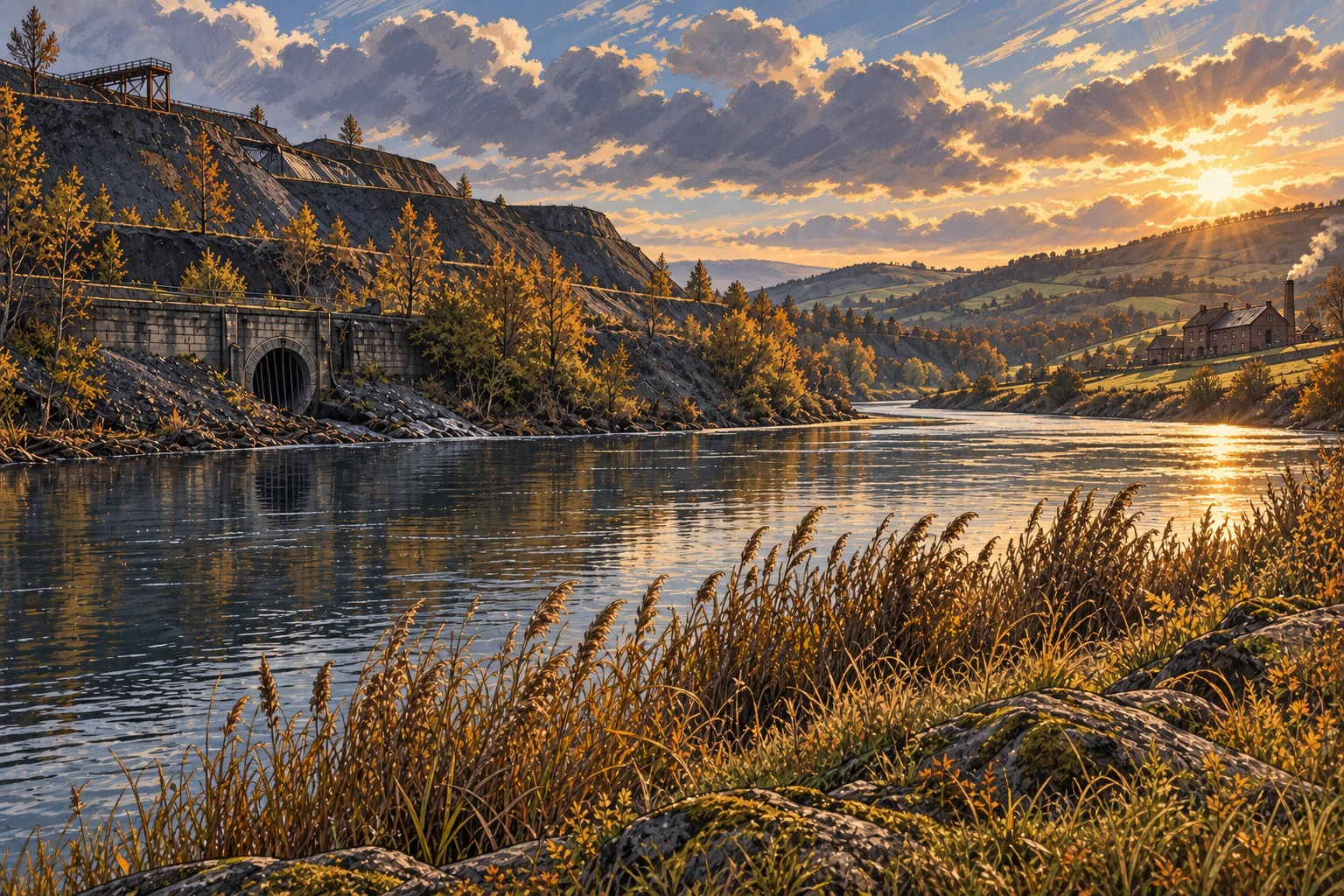
Cultivated garden beds sit inside fully enclosed transparent polyurethane or plastic greenhouses to exclude glowing rain; drainage and exterior maintenance remain work outside those enclosures. Some land remains usable because households have cared for it continuously; other fields have returned to scrub because repairing access costs more than the crop can currently repay. River bends support reeds, fish ponds and packing-material harvests. Brackenzell's slag banks and spoil heaps form conspicuous artificial hills with drainage and dust problems of their own.
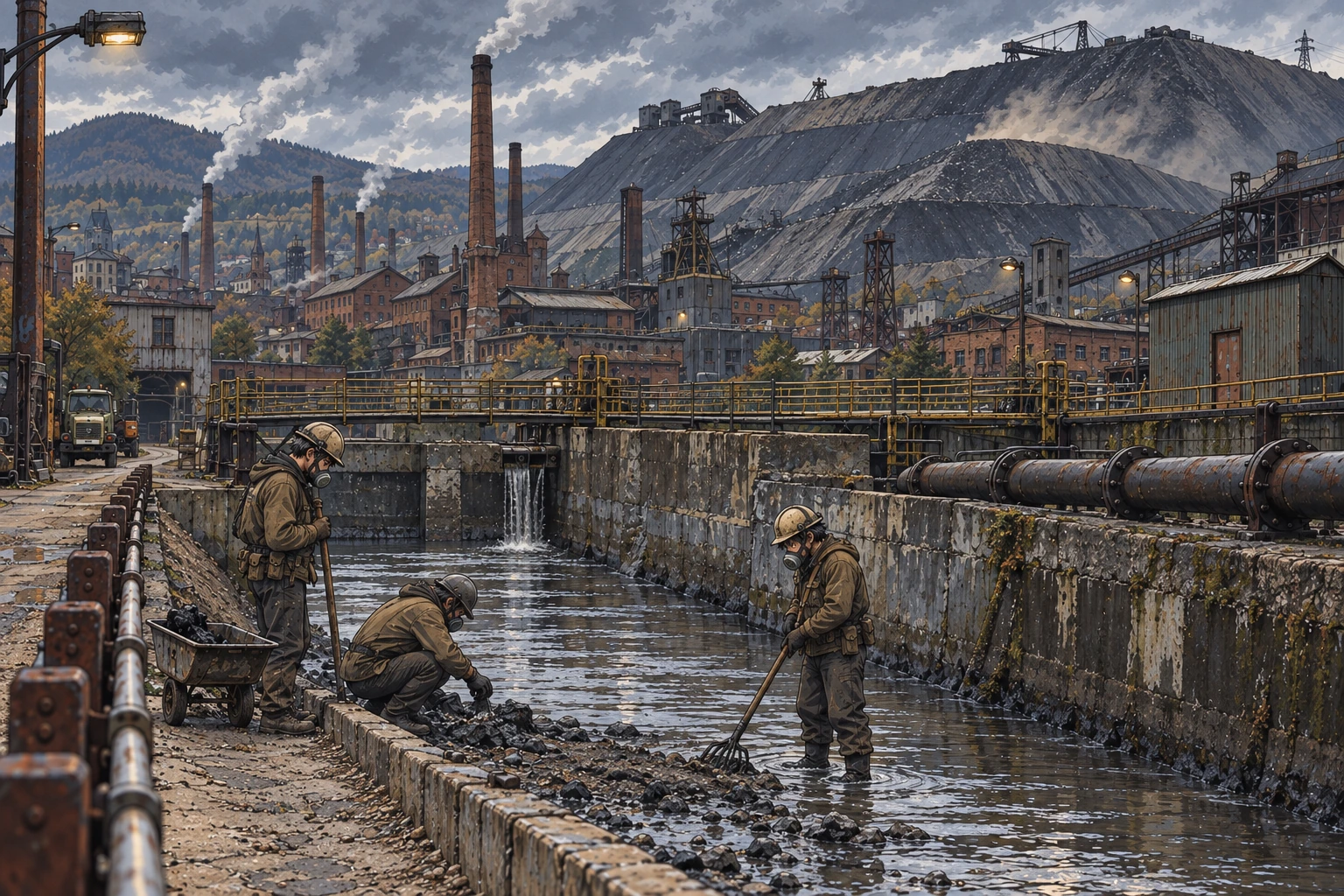
People in this picture · 3
Rados Vennik
left, standing on the edge of the settling channel · Goes by Rad
Residence: Brackenzell. Rad is a drainage crew supervisor who wants samples taken before fresh spoil changes the runoff again. Luka and Bera are members of his work crew.
Luka Brell
centre, crouching beside the water · Goes by Luka
Residence: Brackenzell. Luka is a works sampler who labels observations by collection point rather than by what a supervisor hopes they mean. Rad supervises the crew; Bera clears the material Luka must sample around.
Bera Salk
right, working the long rake · Goes by Bera
Residence: Brackenzell. Bera clears settling channels and knows which deposits will return after the next shift. She wants replacement gloves before hers split. Rad and Luka are colleagues on the same drainage assignment.
A pretty view can contain the consequences of somebody else's work.
Stavenbruck's East Soot Gardens are small allotments inside fully enclosed transparent polyurethane or plastic greenhouses on leased municipal ground, with growers choosing plots partly by exposure to prevailing industrial emissions.
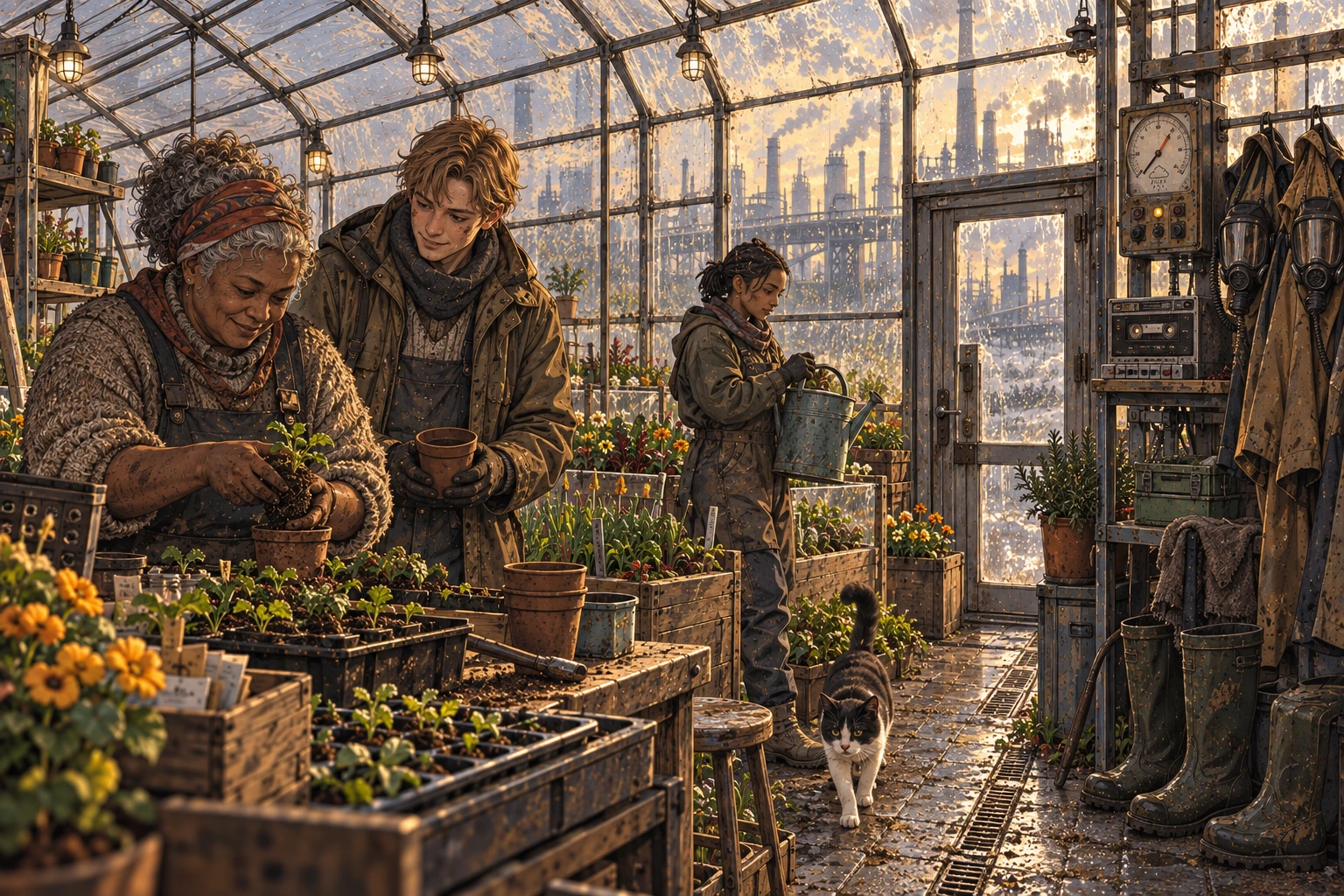
People in this picture · 2
Zdena Korrin
left foreground, potting seedlings · Goes by Zdena
Residence: Northbank, Stavenbruck. A retired seed-store clerk, Zdena tends a licensed greenhouse bench as unpaid neighbourhood work. She treats its small harvest as a fragile luxury and keeps careful watering notes. Ansel is her grandson and helps on her allotted turn.
Ansel Korrin
centre, holding the small pot · Goes by Ans
Residence: Northbank, Stavenbruck. Ans repairs packing crates and helps at the greenhouse between shifts. He likes tending something whose needs can sometimes be understood. Zdena is his grandmother; their access depends on the shared enclosure remaining permitted.
They supplement household variety and offer pleasure, competition and a claim to place; they do not feed the city. Maren Ilt shares a protected strip inside one greenhouse with an older neighbour who considers flowers an irresponsible use of space, then cuts the best blooms for a memorial table.
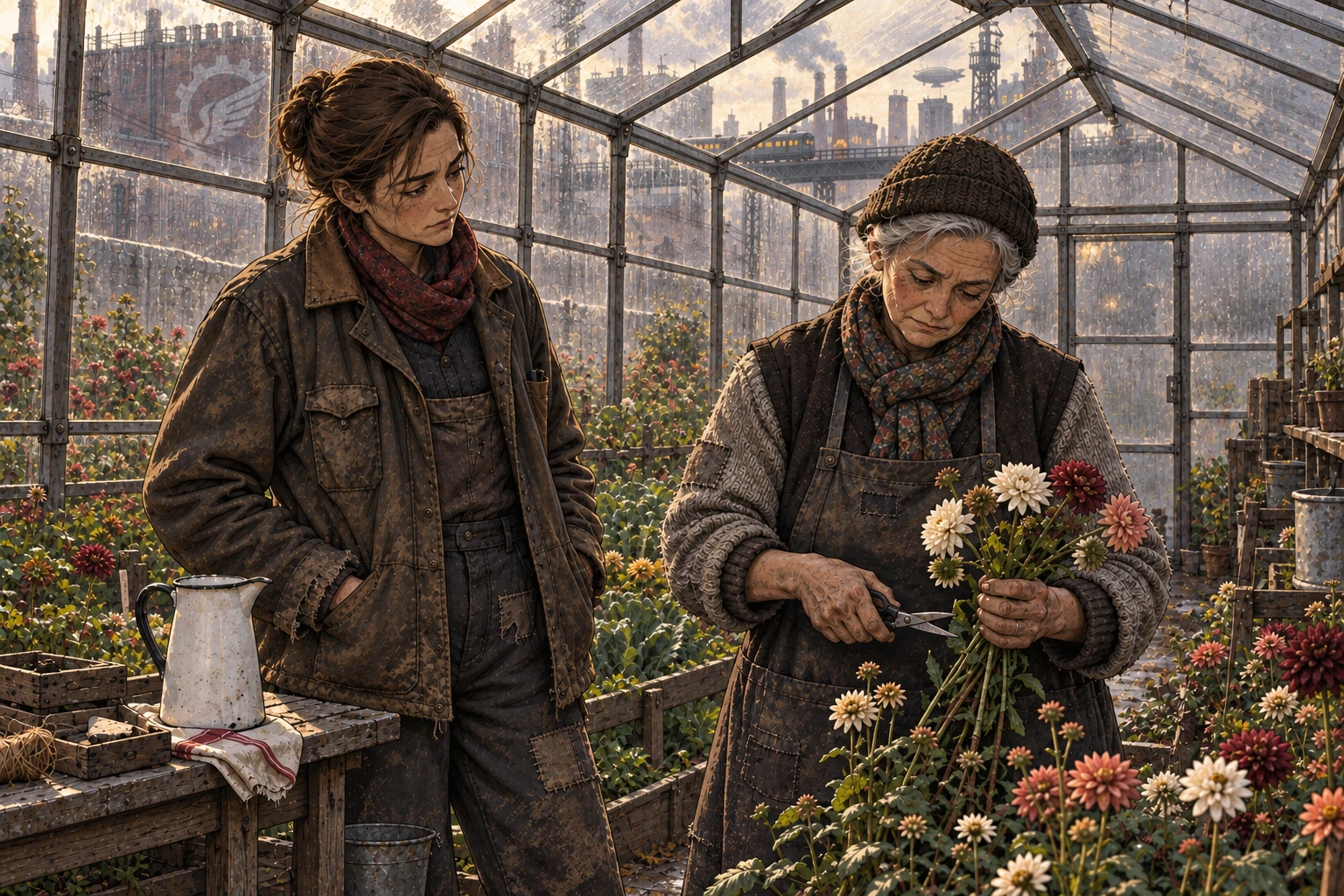
People in this picture · 2
Maren Ilt
left, beside the flower bench · Goes by Maren
Residence: Northbank, Stavenbruck. Maren alters clothing near Return Arch and shares a protected greenhouse strip. She wants daylight for sewing and payment for small alterations. She shares the enclosed growing strip with Ilona, her older neighbour.
Ilona Brecht
right, cutting the memorial flowers · Goes by Ilona
Residence: Northbank, Stavenbruck. Ilona is a retired tram cleaner who tends a protected greenhouse strip. She questions the space given to flowers, then chooses the finest blooms for remembrance. Maren is her neighbour and fellow holder of the shared growing strip.
Heat-assisted cultivation is limited by fuel, structures and maintenance, preserving the importance of the wider agricultural corridor.
Useful materials and the people who know them
Reeds become mats, roof repairs and protective packing. Clay supports brick and pottery work where a kiln can obtain fuel. River gravel and recovered masonry enter construction.
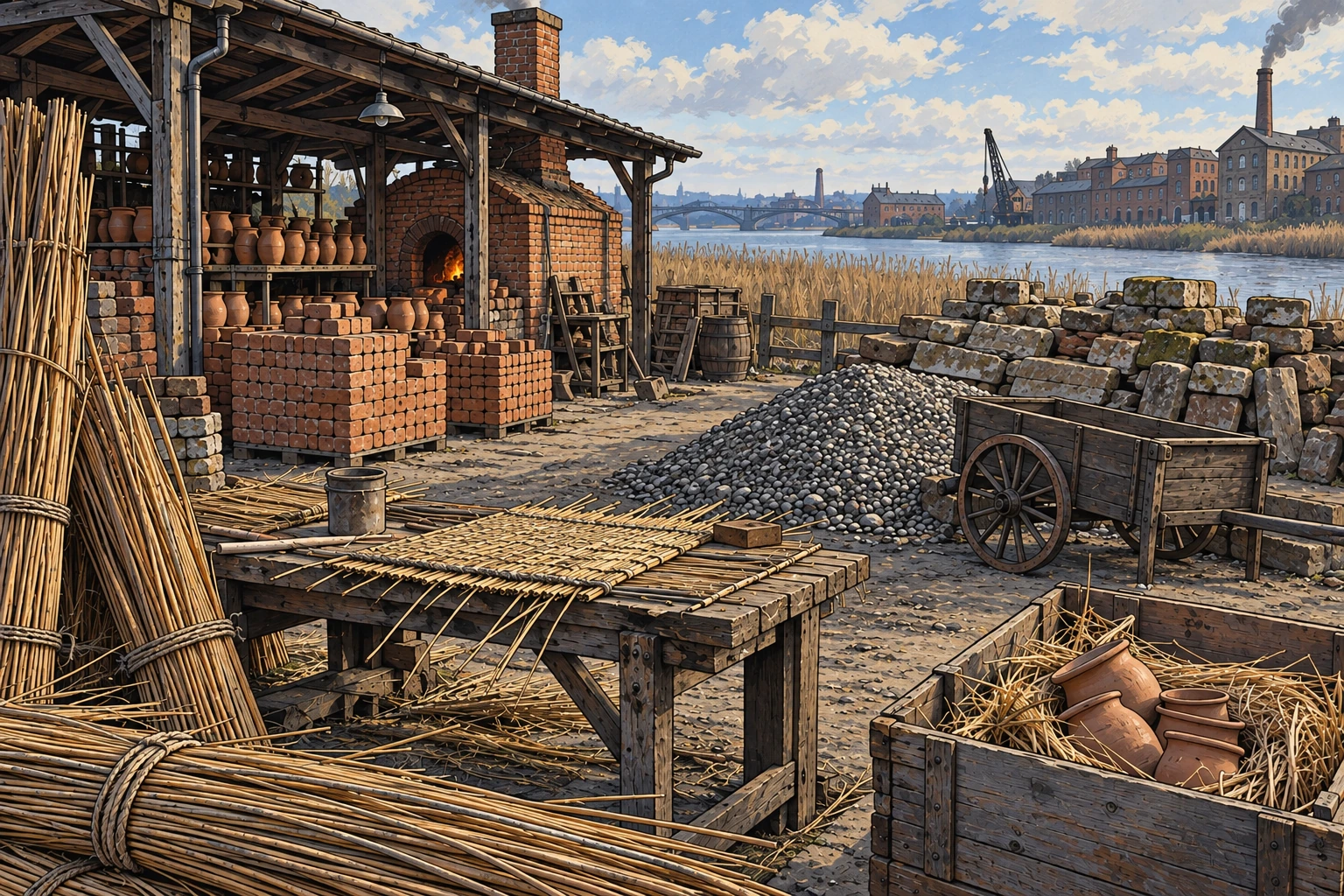
Timber arrives from usable regional supply areas and reclaimed buildings; a household's old wardrobe can be worth more as sound boards than as an unfashionable object. Scrap dealers sort by practical material quality rather than calling everything metal interchangeable.
The bounded extraction site's history does not prove that it contains an inexhaustible valuable deposit. A proposed survey could discover poor economics, contaminated material, usable drainage information or something else depending on the later story's established facts. Exploration must have room for an ordinary result.
Animals in inhabited country
| Animal or local nickname | Ordinary relationship with people | Variation |
|---|---|---|
| River perch and pike | Food, trade and recreational fishing | Catches and advisories depend on the actual water stretch |
| Reed hares | Crop pests, occasional food and familiar landscape animals | Farm households disagree over tolerating them near windbreaks |
| Yard dogs | Companionship, warning and work | Some are well cared for; others live between households |
| Store cats | Pets and rodent control | The best-fed cat is not always the best hunter |
| Crows, called coalcoats by some workers | Opportunistic scavengers and a source of jokes | A local nickname, not a separate species or omen |
| Goats and small livestock | Milk, meat, hides and household investment where feed permits | Ownership depends on space, fodder and local rules |
A strange-looking animal is not automatically Rift-altered. Rare exposure effects can occur.
Contamination as a place-specific problem
The Roven Sampling Circuit is a proposed joint arrangement among municipal waterworks, ferry representatives and downstream producers. Crews collect observations at named points and compare them with earlier readings.
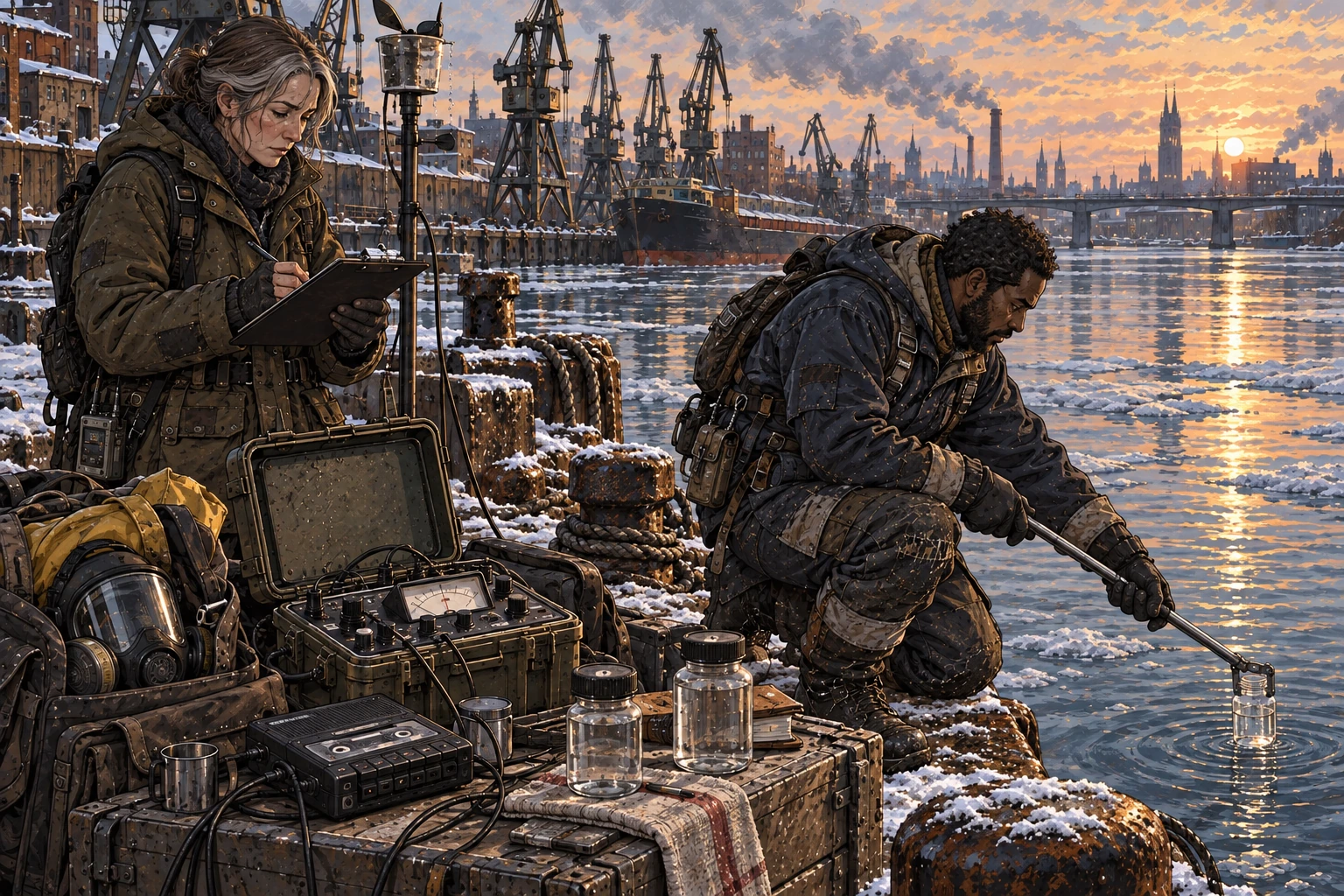
People in this picture · 2
Veda Solvek
left, recording observations · Goes by Veda
Residence: Pump Ward, Stavenbruck. Veda is a municipal sampling technician who keeps field notes in the order observations were made. Idris is her collection partner on the Roven circuit.
Idris Navel
right, lowering the sampling pole · Goes by Idris
Residence: Pump Ward, Stavenbruck. Idris collects water samples and checks that the bottle has actually reached the intended point. He dislikes a rushed comparison. Veda records the observations they gather together.
A report identifies the stretch and time it concerns. An all-clear at the municipal intake does not establish that every pond downstream is suitable for use; a worrying sample does not automatically condemn the entire region.
Residents encounter this through notices, changes in collection points, a fishing ground temporarily unavailable or a disagreement over who funds testing. Bright rain is not a universal danger meter. Ordinary pollution, weather disruption and fictional Rift contamination are distinct possible causes requiring evidence. None should become a convenient explanation that makes every successful repair futile.
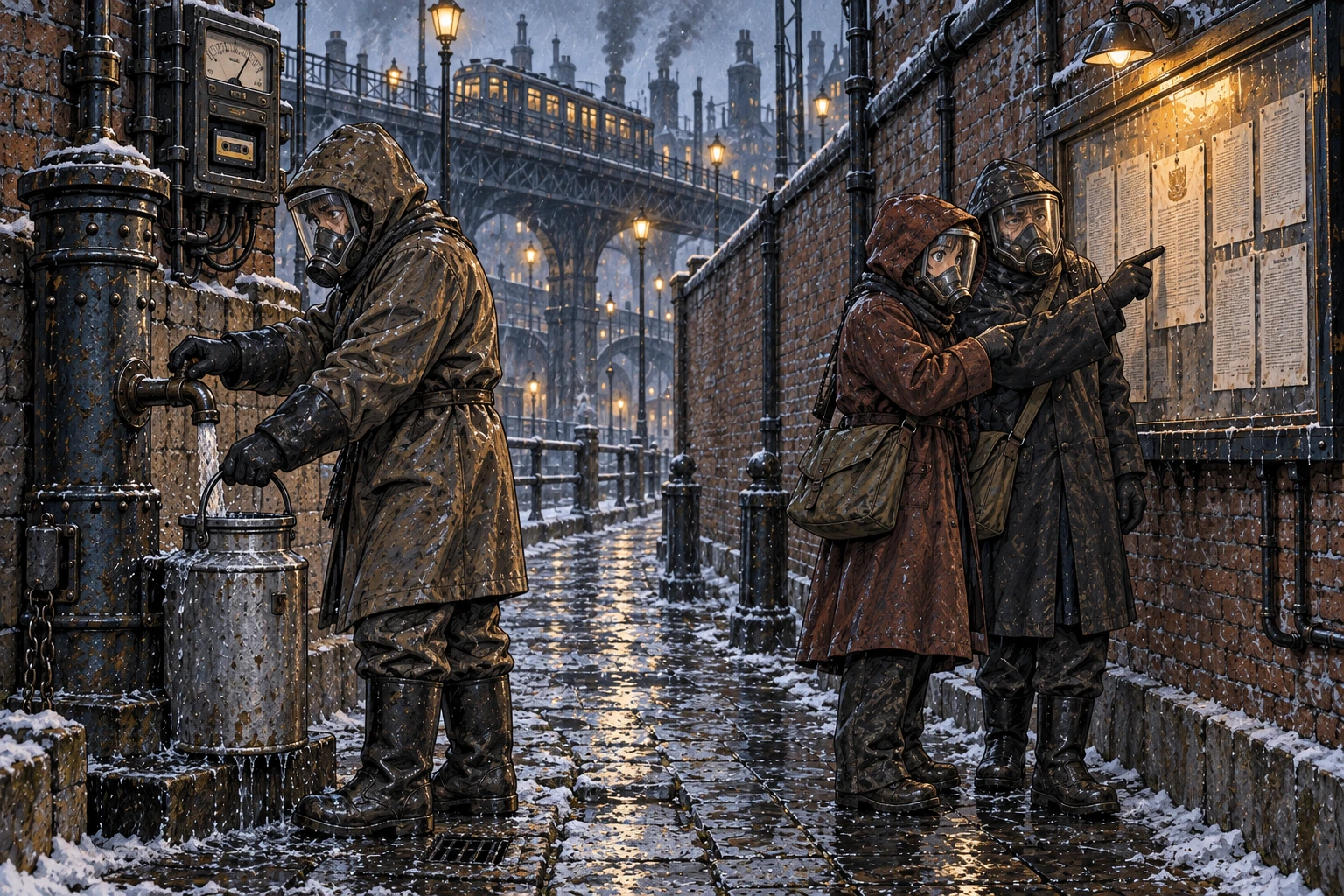
People in this picture · 3
Saskia Velm
left, operating the water tap · Goes by Sas
Residence: Northbank, Stavenbruck. Sas is a bakery cleaner collecting household water from the replacement point. She has brought containers she can carry home safely. The notice readers are neighbours using the same altered service.
Alma Dorek
right, pointing at the notice · Goes by Alma
Residence: Northbank, Stavenbruck. Alma alters work gloves and reads notices aloud when a neighbour asks. She checks the location as carefully as the date. Rami is her neighbour studying the notice with her.
Rami Dorek
beside Alma at the notice board · Goes by Ram
Residence: Northbank, Stavenbruck. Ram is a retired tram electrician who prefers to verify the new collection point before carrying empty vessels across the district. Alma is his partner; Sas lives in their neighbourhood.
An illustrative story could follow Hollenmere seeking independent sampling after a pattern of poor catches, Tarnfeld neighbours disputing a changed drain, or a survey crew deciding whether a neglected route is worth restoring. The scientific and social questions intertwine: whose measurements are trusted, who bears an interruption and what would count as evidence that conditions improved? A restored field, reliable warning or reopened public path can be a durable achievement.
Protected cultivation
Growing food is dangerous because of the glowing rain. Gardens must be fully enclosed overhead and on all sides in transparent polyurethane or plastic greenhouses that keep the rain off the plants. This includes food and flower gardens. .